Wednesday, April 24, 2013

Unit T Big Question #1

How does the trig graphs relate to the Unit Circle?
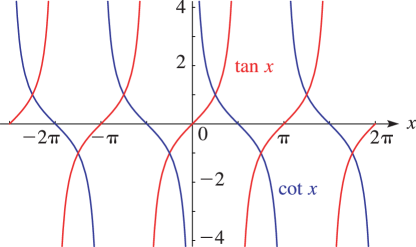
A. Period? Why is the period of Cosine 2 pi, whereas the period for tangent and cotangent is pi?


1.      What is this concept about?
This concept is about is understanding why there is a difference among the periods of sine and cosine and tangent.  These pictures will show the relationship the period has with the unit circle.  By doing this we learn the pattern cosine, sine and tangent have on the Unit Circle which helps us with answering our question.

What the viewer needs to pay close attention to in order to understand the concept?
The viewer needs to pay close attention to the relationship among the unit circle and the graph. By this I mean that they are similar because the graph takes the same units on the quadrant angles (0, π/2, π, 3π/2, 2π) and lays them horizontally on the x- axis.  A KEY FACTOR is to know the pattern of each ratio, this helps tremendously with understanding the answer to our question.

PATTERN:


 Sin++--

This picture depicts how the unit circle lies on the X axis with it s units. It is also showing how the patterns go for the whole period from 0 (0 degrees) to 2 pi ( 360 degrees), 1 whole revolution. 
Cos +--+


For the pattern seen above the highlighted area shows the repetition the tangent pattern within the revolution, therefore since it goes half a revolution the period is pi because that is where it starts its repetition


Tan    +-+-


1. B. Amplitude? How does the fact that sine and cosine have amplitudes of one ( and the other trig functions don't have amplitudes) relate to what we know on the Unit Circle? 

Amplitude: Is the" half distance between the highest and lowest point".


         What is this concept about?
This concept is about explaining why sine and cosine have amplitude of 1 whereas the other trig functions don’t. This is going to involve the Unit Circle and its ordered pairs, it contains on the quadrant angles.

What the viewer needs to pay close attention to in order to understand the concept?
Pay close attention to the explanation on how the unit circle and the graph are related. Knowing where the ordered pairs will be located on the graph is very important. As for the other trig ratios they are derived from the cosine and sine ratio identities and reciprocal identities in order to get  the asymptotes. In this case all the trig ratios besides cosine and sine will have asymptotes. 

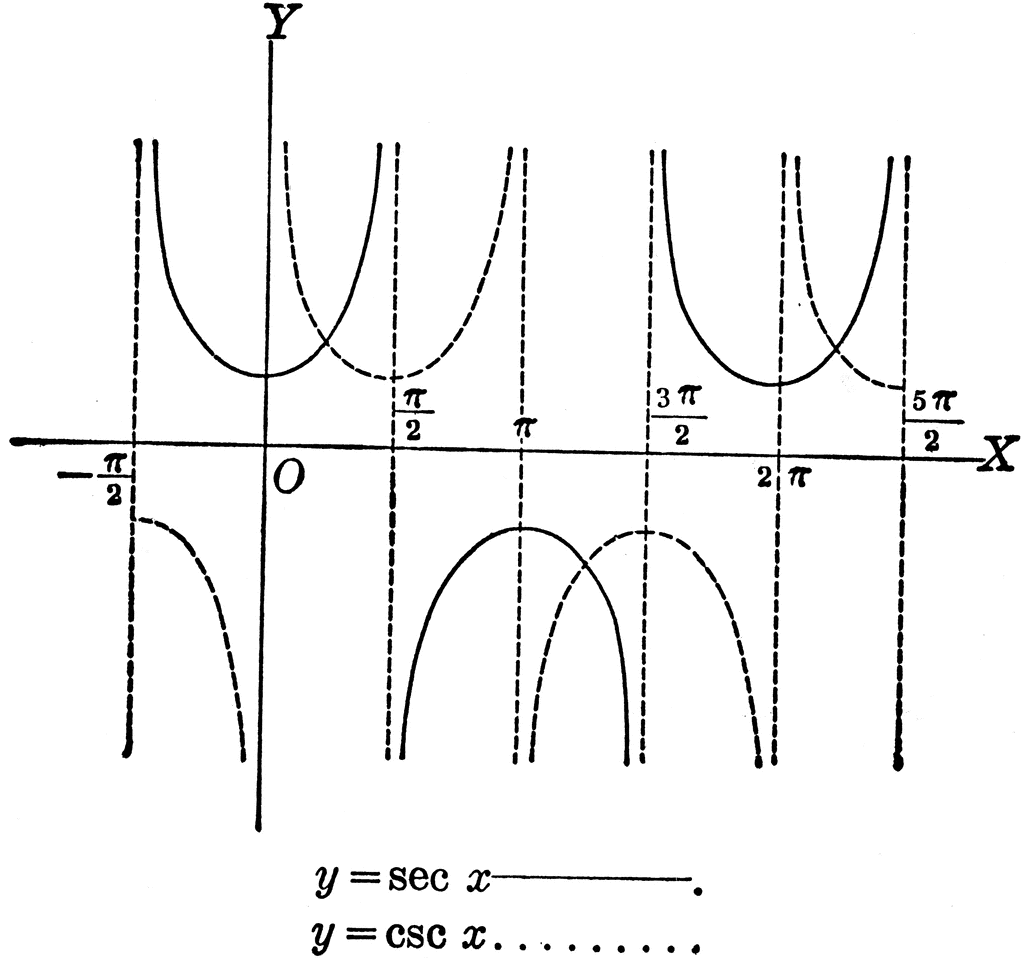
Tangent, Cotangent, Secant and Cosecant don't have an amplitude because they don't have a  highest or a lowest point on there graph, therefore no amplitude can be found.  What they do have is asymptotes, which are explained in Unit T Big Question #4.(Pictures shown below show cosecant and secant graphs)


This image shows the ordered pairs of the quadrant angles  on the unit circle. The highlighted numbers are the ones we will use for labeling the graph.

Here the graph is showing the amplitude of the cosine which is one. In the previous picture
shown it highlighted the numbers we were going to use. The graph has points on 1(0), 0 (pi/2), 1(pi), 0(3pi/2),1(2pi). But we know the amplitude is one because at the ordered pairs  (0,1) ,(pi,-1),(2pi,1) have the amplitude of one.   On the bottom it shows where the line will cross to be at 1, the amplitude. 


Similar to the cosine graph the amplitude of sine is  1. The amplitude is located wherever sine is 1 on the ordered pairs. The sine is one at the 90 degree, which is pi/2 on the graph and at  270 degrees which is 3pi/2 on the graph. With knowing this the graph will have a point on (pi/2,1) which gives it the amplitude of one. An the other point is (3pi/2,-1) which has the amplitude of one as well. The bottom shows where the line will cross the one.


Cite:

Unit T SSS Packet
www.googleimages.com


Monday, April 15, 2013

Assessment # 3; #1 Unit S Concept 3


What  is the video about?
This is Assessment #3 Unit S Concept 3 being shown. This problem goes over #1 on the SSS packet, it explains power reducing formulas.  

What the viewer needs to pay close attention to in order to understand the concept?
What the viewer needs to pay close attention to is is what power reducing formulas we will be using in order to solve the problem. The main, very important  concept is that we need to remember our goal is to get the equation to the highest power of one. Another important key the viewer can pay close attention to is using the tactic from Unit Concept 4, with using the M; pay closes attention to how this is explained because it can be tricky. 

Assessment #2; Comparing Half- Angle & Sum/Difference


We know the answers are the same on both because we confirm it with our calculator. We plug each equation into our calculator and we should get a decimal point. Then we enter the 105 degrees with sine, cosine, and tangent and receive and equivalent decimal from the ones in the  equation. What I got for this particular equation is : Cosine= -.258, Sine= .965, Tangent= -3.732.Thank You for viewing!!

Sunday, April 14, 2013

Assessment #4; Unit S Concept 7 #5


What is this problem about?
The problem is from Unit S Concept 7, solving equations with half-angle formulas. It shows us how to get our answer with replacing equation with half angle formulas. 

What the viewer needs to pay close attention to in order to understand the concept?
The viewer needs to pay close attention to what formulas we use in order to replace certain parts of the equation. There is a Pythagorean identity being used, we learned this from previous unit. We also need to use the unit circle to get our exact answers. Thank You for viewing!!

Wednesday, March 27, 2013

Student Problem Unit R Concept 2


What is this problem about?

This image shows Unit R concept 2. The problem that is being solved is sinu=8/17 and cosv 4/5. The image as well just shows sin(u+v) and tan(u-v) being solved. Now in the problem it mentions that the U lies in the 2nd quadrant and the v lies in the 1st quadrant.

What does the viewer need to pay close attention to in order to do the problem correctly?

What the viewer needs to pay close attention to is knowing where the positive and negative go, by this I mean where the negatives are on the triangle. We also need to pay attention to how we get the cosu,sinu,tanu and sinv,cosv, and tanv to plug into the problems(we use Pythagorean theorem). We have to draw the triangles in the corresponding quadrant the ratio belongs with. Well thank you for viewing this image.

Tuesday, March 26, 2013

Unit R Student Problem Concept 3


1. What is the problem about?

The image shows a problem from Unit R Concept 3. The problem is type two, inverse trig function using sum and difference. In this case our problem is gong to be an addition sin.

2.what does the viewer need to pay close attention to ?

The viewer needs to pay attention because in the problem we have inverse trig functions for both. We need to pay close attention on how we got the sinU and the Cos v.  Furthermore labeling the ordered pairs with sinu and cosu, sinv and  cosv, as shown in the problem, is simpler because it is easier to plug into the equations. Well thanks for viewing this image.  


Unit R Concept 1 Student Problem


What is this problem about?

These images show a problem from Unit R Concept 1, the  degree is 315. The top 2 images portrays the difference equation and the bottom image shows the sum formula. 

What does the viewer need to pay close attention to ?

The viewer needs to pay closes attention to see whether the ordered pairs do correspond to the degrees that were added because if they aren't they won't give you the same answers for the sum and difference problem. That leads me to another key point both the sum and difference problem have the same answer,  this is supposed to occur when solving the same problem both ways. Next, we need to pay attention to the Positive and Negative signs in the problem, we need to make sure we include them in the equations when solving. Lastly make sure you write down the correct formula because I wrote down the wrong formula at first when trying to solve the difference of tan and I noticed the answers didn't match up  with  he sum equations then I fixed my mistake. Well,  Thank You for taking the time to view my pictures.